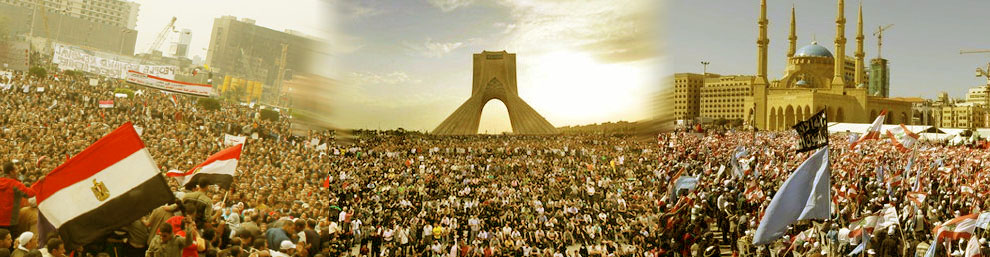
Hezbollah: Is this still really resistance?

 Commentary by Riccardo Dugulin – 15 January 2012
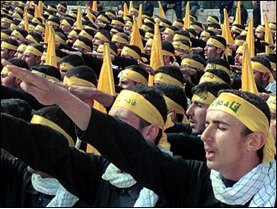
Source: theblaze.com

The term ‘resistant’ provides the person it describes with an almost immediate moral high ground. Regardless of the historical time and place, once put into a conflict situation the resistant is an individual that willingly decides to make disproportionate sacrifices and to take above than average risks to defend his values and homeland. From the Hashashiyyin Shiite rebels resisting Sunni Saljuq rule in Persia between 1092 and 1265 to the armed Algerian factions freeing their territory from French occupation in the 1950’s; resistance movements always face a large and organized foreign army with elements of indirect and asymmetric warfare. Beyond the concrete operational techniques such armed groups decide to use to protect and free their homeland, the resistant is the beneficiary of almost complete moral superiority. Continue reading
4 Comments

Filed under English, Lebanon & Syria

Politics and the Opposition: The Debate that is Failing the Syrian Revolution

Commentary by Tamer Mallat – 10 January 2012

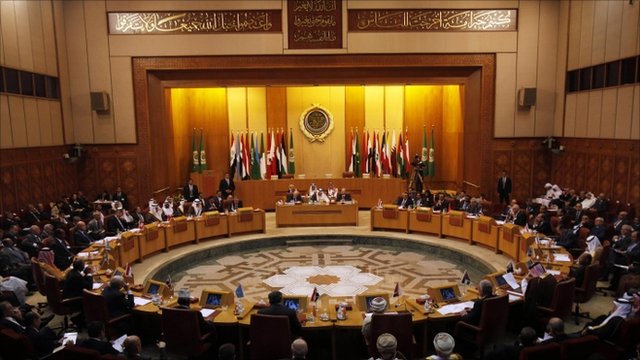
Arab League Foreign Ministers meeting on Syria. Source: bbc.co.uk/

The ten month long Syrian Revolution has entered a dangerous phase. Close to three months will have passed since the Syrian National Council was formed, and the streets of Syria are no less bloody than they were before the opposition organized into an effective body in October. The legitimate and anti-Assad SNC umbrella is hardly to blame for the worsening condition of a cancerous regime pushing its “treatment” program into overdrive. If anything, the maturing course of the council has rendered Bashar al-Assad’s political credibility close to null. While his speeches were hardly ever impressive, the disowned Syrian leader’s infamous Barbara Walter’s interview revealed just how little anyone still took the President’s words seriously. Dubbed delusional, Assad joined the ranks of discredited Middle Eastern leaders no longer in control of the monopoly of the Arab political space they once owned. The consequences of such an evolution, while seemingly positive, have also produced paradoxical side effects. Continue reading

Leave a comment

Filed under Arab Spring, English, Lebanon & Syria

De quel droit ? Quand l’Occident rejette les votes arabes

Par Basile Roze – 12 décembre 2011

Rached Ghannouchi. Source: http://www.monmag.com.

Les récents évènements qui secouent la Tunisie, l’Egypte, le Maroc et bientôt la Libye nous renvoient, français, et renvoient l’occident en général à sa propre condition. Nous ne parlons pas ici des révolutions ou révoltes arabes en général mais de leur traduction politique : le retour ou l’arrivée au pouvoir des « islamistes ». « Islamistes modérés », « partis religieux », les médias ne manquent pas d’inventivité – et souvent d’approximations – pour nommer ainsi cet Autre effrayant, longtemps repoussé à la marge des sociétés arabes, pour rassurer un occident confortablement installé dans son assise de préjugés. Mais toutes ces nouvelles alarmistes posent inévitablement une question : de quel droit ? De quel droit les sociétés occidentales se sentent-elles si directement concernées par ce qui arrive pourtant dans des pays souverains, dont certains sont désormais entrés dans une longue phase de transition démocratique – certes très tumultueuse-, et dont le peuple participe directement du fait politique ? Continue reading

4 Comments

Filed under Arab Spring, Egypt, Français, Libya, Morocco, Tunisia

The Saudi Arabian Porcupine and the Spring in the Desert

By Riccardo Dugulin – 10 December 2011

In the course of the first weeks of autumn, the Kingdom of Saudi Arabia went through a number of events which largely altered its perception of the regional strategic balance.  On October 8th President Ali Abdallah Saleh stated once more he would leave power in ‘coming days’ amid further protests and violence in Yemen. On October 12, an alleged terrorist plot lead by Iranian secret agents was unfolded in Washington as a hit squad was preparing the assassination of Adel Al Jubeir, Saudi Ambassador to the US. On October 21st President Obama declared that all US troops will be leaving Iraq by January 2012, thus leaving the Iraqi armed forces as the only responsible for the sovereignty and security of their country. On October 22, Sultan Bin Abdul Aziz Al Saud died. At the age of 80, he had been the longest serving minister of defense and Crown Prince since 2005. Continue reading

Leave a comment

Filed under Arab Spring, English, Gulf states, Iran, Saudi Arabia

La révolution arabe et ses femmes

Par Salima Naït Ahmed – 30 novembre 2011

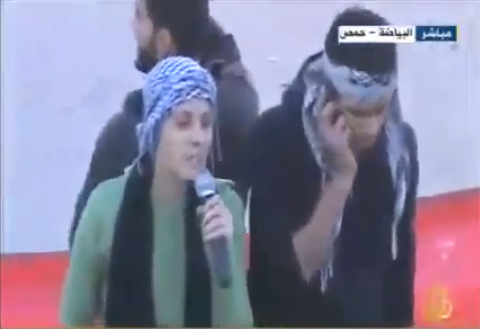
L'actrice syrienne Fadwa Soleiman, qui dirige une manifestation à Homs

« Un regard résolu dans lequel Dieu a déposé une éternité d’espoir ». C’est ainsi que l’écrivain algérien Mohamed Benchicou[1] décrit le regard altier que les femmes arabes montrent aujourd’hui au monde entier. La défiance ouverte des systèmes en place par le féminisme est en vérité ancienne, dans le monde arabe et musulman. La poétesse et théologienne persane Fáṭimih Baraghání ne l’avait-elle pas montré dès le XIXe siècle, quand elle parut sans voile à la conférence de Badasht en 1848 ? Son geste signait en même temps sa condamnation à mort. Refusant les avances du monarque Qajar qui auraient pu la sauver, cette docteure de la loi islamique avait dit à ses bourreaux, avant d’être exécutée et jetée dans un puits : « Vous pouvez me tuer quand vous voulez, mais jamais vous n’arriverez à empêcher l’émancipation des femmes ! » Continue reading

Leave a comment

Filed under Arab Spring, Français

What the ‘End’ of the European Union Could Mean for the Middle East

By Riccardo Dugulin – 27 November 2011

At the beginning of September, President Sarkozy and Mr. Cameron, Prime Minister of the United Kingdom, visited Libya. For better or for worse, France and the United Kingdom will remain intrinsically linked to the Libyan conflict. On another level, European institutions have grown largely ineffective with regard to the Syrian quagmire. Restrictions and sanctions have been implemented through decisions taken by the Council of the European Union, with the last round of sanctions implemented on the 14th of November. 2011. Banning arm sales and imposing travel restrictions and asset freezes to a very limited number of regime officials, does not send a message of strength and determination from EU officials. These two tendencies present a clear dichotomy: the end of the twentieth century and the beginning of the twenty first was represented by an increased presence of the EU in the broader region through the development of its European Neighborhood Policy. Recently, this mindset has diminished, with national governments slowly retaking their share of foreign policy independence. Amidst the worst political and economic crisis the EU has known since its inception, national interest, both domestic and foreign, is forcing its way back into the game. Continue reading

1 Comment

Filed under English, Foreign Policy & IR

« Ta tante Pacifique est morte »(1) : sur les « évènements » en cours, place Tahrir

Par Youssef El-Chazli – 23 novembre 2011

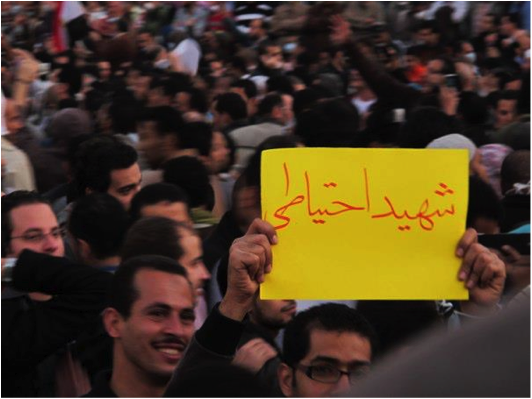
"Martyr en attente". Photo par Youssef El-Chazli.

La deuxième vague de la Révolution égyptienne se déroule actuellement dans tout le pays. Elle est la conséquence de plusieurs processus en cours depuis janvier 2011. Il ne sert à rien d’essayer de trouver la cause ou les origines des « incidents » actuels, de ce qui a causé le basculement. L’événement en cours se suffit en lui-même à expliquer et mettre en relief ses enjeux. Continue reading

Leave a comment

Filed under Arab Spring, Egypt, Français