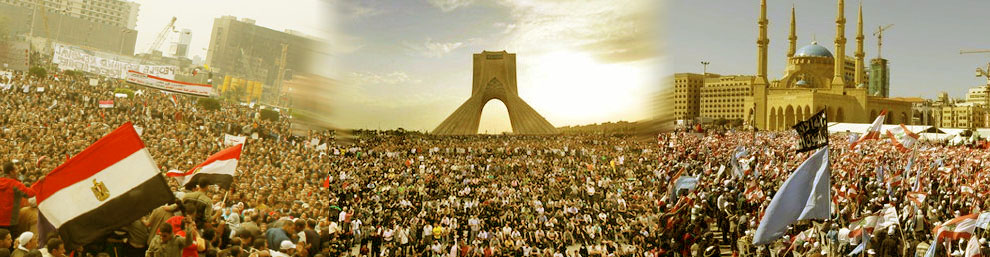
Michael Young is one of the leading political analysts in the Middle East and broader Arab world. He is the opinion editor of the The Daily Star (Lebanon) and the author of The Ghosts of Martyrs Square: An Eyewitness Account of Lebanon’s Life Struggle. He also tweets @BeirutCalling. In light of recent developments in the region, ArabsThink.com has had the opportunity to interview Michael Young about his take on events. The interview was conducted on the 9th of August 2011. Continue reading
Category Archives: Lebanon & Syria
Interview: Michael Young on the “Arab Spring”
Filed under Arab Spring, Egypt, English, Foreign Policy & IR, Gulf states, Interview, Lebanon & Syria, Turkey
لبناني سوري واحد
بقلم أسامة حريري – ١٣ آب ٢٠١١
وأخيرًا كُسِر جدار الصّمت في لبنان. منذ بدء الثّورة السورية ، لم يُحرّك الشعب اللّبناني ساكنا ً . أمّا الذين تجرّأوا ونزلوا الى الشارع فكانوا قلائل ووُجهوا من قِبل شبّيحة النّظام السوري في لبنان. لكن اليوم اختلف الوضع، فلم يعد بالإمكان السكوت عن المجازر الفاضحة التي يرتكبها نظام البعث، خاصّةً بعد الموقف المندّد لجامعة الدول العربيّة الذي أتى مُتأخّرا ً جداً. تبعا ً لذلك، دعا مثقّفون لبنانيّون الى وقفة تضامنية مع الشعب السوري في ثورته في ساحة الشهداء وسط بيروت ، نهار الإثنين الواقع فيه 8-8-2011
Filed under Arab Spring, Lebanon & Syria, عربي
Standstill of Turkish-Syrian Relations Decisive for Syria
Commentary by Van Meguerditchian – 11 August 2011
Turkish Foreign Minister Ahmet Davutoglu’s speech in Ankara following a six-hour talk with Syrian President Bashar al-Assad signals a crucial turning point in the shaky relations between the two Middle Eastern states. As Assad stood firm on his belief that his army is fighting terrorist groups, Mr. Davutoglu took another step towards allying his country with pro-democracy protesters in Syria. Continue reading
Filed under Arab Spring, English, Foreign Policy & IR, Lebanon & Syria, Turkey
Syrie, Maroc, Jordanie : les limites d’un modèle autoritaire fondé sur l’économique
Par Alghali Tazi – 3 août 2011
La Syrie est très différente du Maroc, pourtant, ces deux pays partagent aujourd’hui, avec la Jordanie également, une configuration socio-économique presque similaire ; et qui a des conséquences quasi-semblables sur l’architecture du pouvoir de ces trois pays. Or, il est frappant de noter que d’une part l’évolution qui a conduit à cette situation ne date que d’une dizaine d’années, et d’autre part que cette évolution est similaire à celle qu’ont connue l’Egypte et la Tunisie entre la fin des années 1980 et les années 2000. Autant d’éléments qui amènent à parler d’un « retard » de dix à vingt ans du Maroc, de la Jordanie et la Syrie sur l’Egypte et la Tunisie. Continue reading
Filed under Arab Spring, Français, Jordan, Lebanon & Syria, Morocco
للأسد عرين في لبنان
بقلم أسامة حريري – ٣١ تموز ٢٠١١
لم يكن أحد يتوقع أن تؤول الأمور الى ما آلت اليه في سوريا ، حتّى المحلّلين السّياسيين المختصين بالمنطقة . بعد نحوة أربعة أشهر على بدء الثّورة السورية ها هو الشّعب السوري يواجه نظام الأسد باللّحم الحيّ . بالمقارنة مع مصر أو تونس أو ليبيا ما زال الموقف الغربي من آلة القتل البعثية ضعيفاً ، فضلاً عن معارضة الصّين و روسياّ لأي قرار جدّي لفرض العقوبات. وبذلك لم يبقَ للشّعب السّوري في الوقت الحاضر سوى المراهنة على شجاعة أبنائه بغياب الموقف الجدّي المُنتظر من الدّول العربية والمجتمع الدّولي . Continue reading
Filed under Arab Spring, Lebanon & Syria, عربي
عندما يصبح الدواء داءً
بقلم جيسّي نصّار – ٢٢ تموز ٢٠١١
لقد مرّت سنوات عديدة على انتشار ظاهرة اجتماعية مسمّة قد نسمّيها- لدقّة التفسير- “السّل الاجتماعي”. غالباً ما نقول نحن اللبنانيون اننا نعيش قصة يومية كاريكاتورية. ما يضحكنا يبكينا و ما يبكينا يميتنا من الضحك. ربما هذا ما عاشه الشعب المصري طوال هذه السنوات. و لكن الهزاء و حسّ الفكاهة أدّيا الى ما لم يتصوره أحد – بروز الأمراض الجديدة التي سبّبتها الثورة-. Continue reading
Filed under Arab Spring, Lebanon & Syria, عربي
The Pesky Middle Classes of Syria’s Regime: The Paradox of a Caste that Must Shape Syria’s Post-Revolutionary Future
Commentary by Tamer Mallat – July 18 2011
It was on March 15, 2011, in the heart of the Syrian capital Damascus, that the spark of a protest attended by no more than a few dozens ignited a revolution that would engage millions. It is in Damascus where, symbolically, and then structurally, the Syrian Revolution will bear fruit and finally end. Symbolically, because the capital represents, with the northern city of Aleppo, one of the last autocratic havens for the regime. Structurally, because the fall of these fortresses will not be the work of the countryside revolutionaries, but by those who today constitute the last bastions of regime support: the urban Syrian middle classes. Continue reading
Filed under Arab Spring, English, Lebanon & Syria